QuickBooks Web Hosting: A CPA’s Practical Guide
Your staff accountant is working from home. Your client needs a QuickBooks file pulled at 9 PM. Your IT person just quit. If any of that sounds familiar, you’ve probably already considered moving QuickBooks Desktop off your local server. QuickBooks web hosting — running your licensed Desktop software on managed cloud servers — solves all three problems without forcing a migration to QuickBooks Online.
Here’s how it actually works, what to watch out for, and how to choose a provider that won’t leave you on hold during tax season.
What QuickBooks Web Hosting Actually Is
QuickBooks hosting means your licensed copy of QuickBooks Desktop — Pro, Premier, Enterprise, or Accountant — runs on a remote server managed by a third-party provider. You and your team access it through a remote desktop session over the internet. The software behaves exactly like it does on a local machine, with the same menus, add-ons, and company files, but the hardware is someone else’s problem.
This is meaningfully different from QuickBooks Online. You keep the Desktop feature set: job costing, inventory assemblies, industry-specific editions, and your existing add-ons. Nothing about your workflow has to change.
One non-negotiable: you must hold a valid license for every version of QuickBooks you access through a hosting provider. You can transfer your licensed copy to an authorized host. Also worth knowing — Intuit’s Service Discontinuation Plan means older, unsupported versions cannot be hosted. If your firm is running an outdated version, you’ll need to upgrade before you can move to the cloud.
Choosing a Provider: What the Market Actually Looks Like
Intuit maintains a list of authorized hosting providers — AbacusNext, Ace Cloud Hosting, Apps4Rent, CloudVara, Coaxis, and Rightworks are among them Intuit. Rightworks is the only provider Intuit actively promotes to its own users, and it supports QuickBooks Online, Pro, Premier, and Enterprise. Intuit’s own QuickBooks Desktop Enterprise Hosting starts at $250/month for one user through Rightworks, which tells you something about where the premium tier sits.
For smaller firms watching per-user costs, the range is wide. Some providers advertise plans starting around $12–$29/user/month, while the more full-featured tiers from established providers typically run from roughly $69/user/month upward. The cheapest option isn’t always the right one — SOC 2 security certification, nightly backups, add-on compatibility, and live 24/7 support are table stakes for a firm handling client financial data.
Ask every prospective host these questions before signing:
- Which QuickBooks versions do you support, and how quickly do you add new releases?
- What third-party add-ons have you tested on your environment (Fishbowl, Method CRM, Bill.com)?
- What does your backup and restore process look like — and how fast can you recover a file?
- Is 24/7 support included or a paid add-on?
How to Set Up QuickBooks Web Hosting Step by Step
Step 1 — Audit your current setup. List every QuickBooks version your firm uses, every add-on, and every user who needs access. A 10-person firm with three separate company files and a payroll add-on has different requirements than a solo bookkeeper with one client file.
Step 2 — Verify your licenses. Pull your license numbers and product keys. You’ll provide these to the hosting provider so they can load your exact version onto the server. Confirm every version is still under Intuit support — check Intuit’s Service Discontinuation Policy if you’re unsure.
Step 3 — Choose a provider and test before you commit. Reputable providers offer a free trial. Use it. Upload a copy of a real company file (sanitized if needed), run your typical workflows, test your add-ons, and deliberately call support with a question to see how they respond.
Step 4 — Migrate your company files. The provider will give you a secure method to upload your .QBW files — typically SFTP or a portal. Don’t email company files. Once uploaded, open them through the remote desktop session and verify everything: balances, payroll setup, preferences.
Step 5 — Set up multi-user access. Add each user account in QuickBooks (Admin > Set Up Users and Passwords) and confirm role-based permissions match what they had on the local server. This is also the moment to tighten access — not everyone needs admin rights.
Step 6 — Train your team, briefly. The remote desktop session is the only new thing. On Windows, they’ll use Remote Desktop Connection; on Mac, they’ll use an RDP client or a browser-based portal. Give them a 15-minute walkthrough and a written login procedure. That’s genuinely all the training most staff need.
Step 7 — Decommission the local server intentionally. Don’t just unplug it. Keep it offline for 30–60 days while the team settles in. Once you’re confident the hosted environment is stable, wipe and retire it per your data destruction policy.
Common Mistakes Firms Make
Assuming all add-ons will work automatically. Not every third-party app is pre-tested on every hosting environment. Apps that rely on local printers, local file paths, or COM-based integrations may need reconfiguration. Test before you migrate.
Skipping the free trial. If a provider won’t let you test before buying, that’s diagnostic information.
Underestimating internet dependency. Hosted QuickBooks requires a stable internet connection. A 10-person firm should audit their office bandwidth and ensure remote employees have reliable home connections before cutting over. A wired connection beats Wi-Fi for RDP sessions.
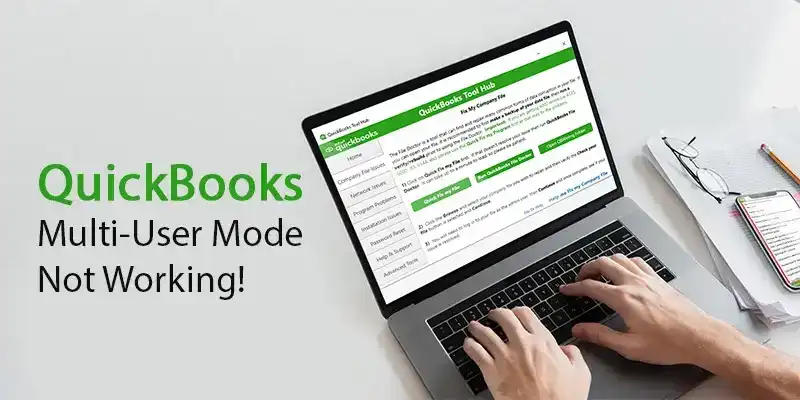
Forgetting QuickBooks Database Server Manager. In a multi-user hosted setup, the provider handles the server-side configuration — but if you ever need to open a file locally (for example, during a trial period), you’ll need to understand how QBDSM interacts with your file storage. Clarify this with your provider upfront.
How Sagenext Helps
For CPA firms that want managed hosting without building an internal IT function, covers the full stack. Sagenext hosts QuickBooks Desktop Pro, Premier, Enterprise, and Accountant editions alongside other tax and accounting software — Drake, Lacerte, ProSeries, Sage 50, Sage 100 — so a firm with mixed software doesn’t need multiple hosting relationships.
The environment is fully managed: provisioning, security, backups, and software updates are handled for you. Multi-user access works through a remote desktop session, so your team accesses everything from a single login regardless of where they’re working. There’s a free trial with no credit card required, which is the right way to evaluate any hosting provider before committing.
For a 10-person firm, consolidating QuickBooks and tax software hosting in one place meaningfully reduces administrative overhead compared to managing separate vendor relationships.
Key Takeaways
- QuickBooks web hosting runs your licensed Desktop software on managed remote servers — the feature set and add-ons stay intact, only the hardware moves.
- You must hold a valid QuickBooks license for every version you host; unsupported versions under Intuit’s discontinuation policy cannot be hosted.
- Evaluate providers on SOC 2 security, backup/restore speed, add-on compatibility, and 24/7 support — not price alone.
- Always run a real-workflow test during the free trial before migrating production files.
- Multi-user setup and permissions should be audited during migration, not assumed to carry over automatically.
- Decommission your local server gradually — keep it offline for 30–60 days before retiring it.
Frequently Asked Questions
Can I host QuickBooks Desktop without buying a new license?
Yes. You transfer your existing licensed copy to the hosting provider — you don’t purchase a new license just to move to the cloud. Provide your license number and product key during onboarding. Each user who accesses QuickBooks simultaneously needs a valid license seat, so a three-user license covers up to three concurrent users on the hosted server.
Is QuickBooks hosted in the cloud the same as QuickBooks Online?
No, and the difference matters for many firms. Hosted QuickBooks Desktop runs your existing Desktop software (Pro, Premier, Enterprise) on a remote server. QuickBooks Online is a separate, browser-based product with a different feature set. Hosting preserves your current workflows, reports, and add-ons without a migration.
What happens to my data if I leave a hosting provider?
You own your data. A reputable provider will give you a full export of your company files in their native .QBW format when you cancel. Confirm this in writing before you sign up. Also confirm how long they retain backups after account closure — some providers maintain backups for a defined window post-cancellation.
How many users can access hosted QuickBooks at once?
It depends on your license and the plan you purchase from your hosting provider. QuickBooks Desktop Enterprise supports up to 40 simultaneous users; Pro and Premier are limited by their respective license terms. The hosting provider provisions server resources to match your user count — confirm the per-user pricing model and whether adding users mid-term incurs setup fees.
Will my QuickBooks add-ons work in a hosted environment?
Most major add-ons — payroll, payment processing, inventory management — work in hosted environments, but compatibility isn’t universal. Before migrating, provide your provider with a complete list of add-ons and ask for written confirmation that each one is supported. Remote Hosting QuickBooks Desktop covers add-on compatibility in more detail for firms running complex integrations.
 Popular Posts