 Microsoft office · Sep 15th 2026 · 7 Min read
How to Sign or Login Into Microsoft Office 365 for Business
Your IT admin just sent over credentials with an .onmicrosoft.com address and you need to get into Word, Outlook, or the admin portal—now. The sign-in flow is straightforward once you know which URL to use and which account type to pick. This guide covers the web sign-in, the desktop app sign-in, first-time setup quirks, and what to do when login refuses to cooperate.
Sign In on the Web
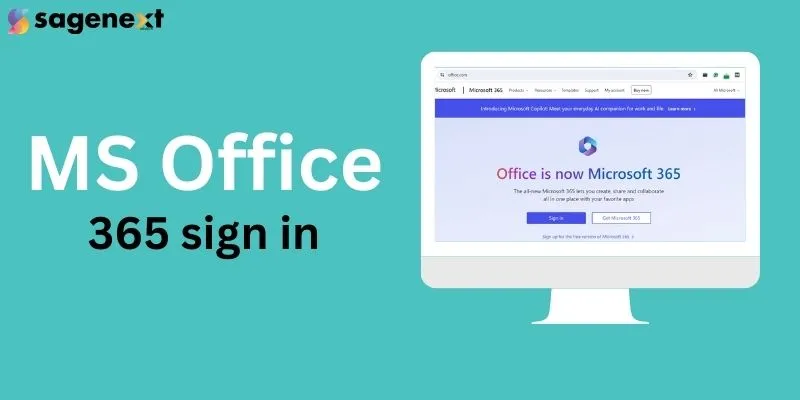
Microsoft routes business users to a different entry point than personal accounts. Use SBA — that’s microsoft365.com/signin, not the general office.com landing page.
Steps:
- Open a browser and go to
microsoft365.com/signin. - Enter the email address your organization provisioned — typically
yourname@yourdomain.comor the fallbackyourname@yourbusiness.onmicrosoft.comif a custom domain hasn’t been configured yet. - Click Next, then enter your password.
- If your organization has multi-factor authentication (MFA) enabled, approve the prompt via your authenticator app, a text code, or a phone call — whichever method your admin configured.
- You land on the Microsoft 365 home screen with access to Outlook, Teams, SharePoint, and the full app launcher.
Already signed in with a personal account? Microsoft explicitly recommends signing out first, or opening a private/incognito window before entering your work credentials. Mixing personal and work sessions in the same browser tab causes silent failures that waste 20 minutes to diagnose.
Sign In Through a Desktop App
If you installed Microsoft 365 apps locally — Word, Excel, Outlook — and they’re running in unlicensed mode or prompting for credentials, fix it from inside the app:
- Open Word (or any Office app).
- Go to File → Account.
- If you see a Sign In button, click it. If a different account is already listed, click Switch Account.
- Enter the email and password associated with your Microsoft 365 business subscription.
- Choose Work or School Account when prompted — not Personal Account.
The app will sync your license and pick up your organization’s settings within a minute or two.
First Sign-In: The .onmicrosoft.com Domain
Every Microsoft 365 business tenant gets an .onmicrosoft.com domain automatically at setup. That address — admin@yourcompany.onmicrosoft.com — is your fallback identity and the one Microsoft uses during initial account creation. Once you verify and connect a custom domain (e.g., yourfirm.com), day-to-day users sign in with the custom-domain address. Keep the .onmicrosoft.com credentials documented somewhere secure; you’ll need them if your custom domain ever has DNS issues.
Microsoft 365 for business supports identity and access management for up to 300 users, so this setup works for solo practitioners up through mid-size firms.
When Sign-In Fails
Three situations cover most login failures:
Wrong account type selected. If you pick Personal Account at the prompt when your firm uses a work account, authentication fails silently. Always pick Work or School Account.
Cached credentials conflict. A stale session from a previous user on a shared machine will intercept your login. Microsoft’s own FAQ recommends trying an incognito/private browser window, clearing cache and cookies, or disabling password managers before anything else.
Username mismatch. Check that you’re using the exact email address — including domain — that was provisioned. A transposed letter or the wrong domain (e.g., .onmicrosoft.com vs. the custom domain) will fail without a helpful error message. If you’re locked out entirely, use the Can’t access your account? link on the sign-in page to trigger a self-service password reset, or contact your Microsoft 365 admin.
How Sagenext Helps
For CPA firms running accounting software alongside Microsoft 365, credential sprawl is a real operational headache. When QuickBooks Desktop, Sage 50, Drake, or ProSeries each have their own login environments, staff spend time troubleshooting access instead of working on client files. handles the hosting layer for your tax and accounting applications — QuickBooks Enterprise, Lacerte, UltraTax, ATX, and others — on a fully managed remote desktop. Provisioning, backups, security patching, and multi-user access are handled for you. Your staff log in once to a remote session and reach every hosted application from there, on any device, without VPN configuration.
If you want to evaluate whether hosted accounting software fits your firm’s workflow, Sagenext offers a free trial with no credit card required.
Troubleshooting Quick Reference
| Symptom | First Move |
|---|---|
| Prompted for personal account only | Open private window; go directly to microsoft365.com/signin |
| Desktop app says unlicensed | File → Account → Sign In with work address |
| MFA code not arriving | Check authenticator app; confirm phone number with admin |
| Password rejected on first login | Use .onmicrosoft.com address as fallback |
| Locked out entirely | Use ‘Can’t access your account?’ on sign-in page |
Key Takeaways
- Business users sign in at
microsoft365.com/signin, not the general Office homepage — this distinction matters for work accounts. - When personal and work sessions conflict, open a private browser window before entering your work credentials.
- Desktop app sign-in lives at File → Account → Sign In; always choose Work or School Account, not Personal.
- New tenants use the
.onmicrosoft.comfallback domain; document it even after you configure a custom domain. - Most failed logins trace to three causes: wrong account type, cached credentials, or a mistyped username — check those before escalating.
- For CPA firms hosting accounting software, a managed remote desktop environment reduces multi-app credential friction significantly.
Frequently Asked Questions
Where exactly do I sign in to Microsoft 365 for business?
Go to microsoft365.com/signin. Enter the email address your organization assigned — either your custom-domain address or the .onmicrosoft.com fallback if your firm hasn’t set up a custom domain yet. This portal is separate from the personal Microsoft account sign-in and will route you to your organization’s tenant correctly.
Why does my work login fail when I’m already signed in to Office?
A personal Microsoft account session in the same browser can intercept a work account sign-in. Sign out of the existing session first, or open a private/incognito browser window and go directly to microsoft365.com/signin. Microsoft’s own guidance recommends this as the first troubleshooting step for work account conflicts.
How do I sign in to Word or Excel with my business account?
Open any Office desktop app, go to File → Account, and click Sign In or Switch Account. Enter your work email and password, then select Work or School Account at the account-type prompt. The app syncs your license automatically once credentials are accepted.
What is the .onmicrosoft.com address and when do I need it?
Every Microsoft 365 business tenant is assigned a default .onmicrosoft.com domain — for example, yourfirm.onmicrosoft.com — at the time of signup. It’s the fallback identity used during initial setup and useful if your custom domain has DNS problems. You can sign in with it anytime, but most firms switch to a custom-domain address for day-to-day use.
What should I try if I can’t access my Microsoft 365 business account?
First, verify you’re using the exact email and correct domain that was provisioned. Then try a private browser window and clear cache and cookies. Microsoft also recommends disabling password managers temporarily, since they sometimes autofill the wrong credentials. If none of that works, use the Can’t access your account? link on the sign-in page, or ask your Microsoft 365 admin to reset your credentials.
For additional context on managing Microsoft accounts across devices, see Microsoft Sql Server 2025 Guide.